Author: Jennifer Adams

  • Landlord Secrets: What Really Gets You Approved for a Rental

    Landlord Secrets: What Really Gets You Approved for a Rental

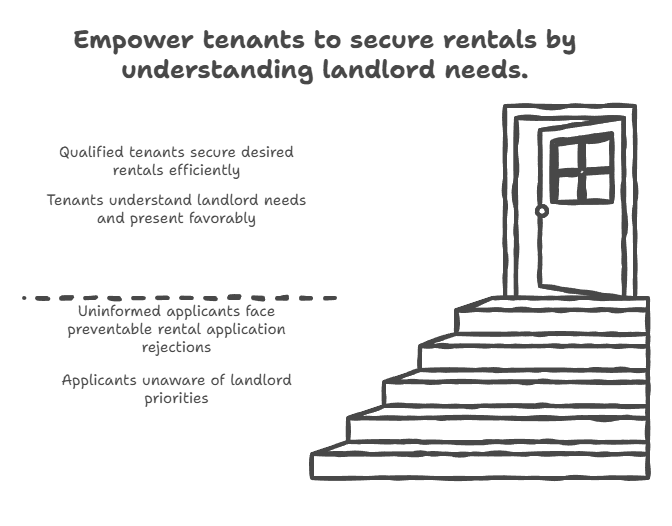
    Look, I’ve been a landlord for 11 years now, and I’m tired of watching good people torpedo their rental applications over completely preventable mistakes. Just last month, I had this perfect tenant candidate – great job, solid income, excellent references – get denied by three different landlords before reaching me. Why? Because nobody had bothered to explain that her student loan default from 2019 was showing up as a collections account on her credit report, making her look like a deadbeat.

    Here’s what kills me: the rental market is brutal right now, with qualified applicants competing for every decent property, and most people are walking into landlord meetings completely blind. They think it’s about being a nice person and having enough money for first month’s rent. Wrong.

    I’ve seen software engineers making $120K get denied for apartments, while minimum-wage workers with perfect rental histories get approved instantly. The difference? Understanding what landlords actually care about versus what you think they care about.

    After screening over 400 applicants and talking to dozens of other property owners, I can tell you exactly what we’re looking for, what will get you instantly rejected, and – most importantly – how to position yourself as the tenant we actually want to call back.

    Because here’s the thing: landlords aren’t trying to make your life difficult. We’re trying to avoid losing money. And once you understand that motivation, everything else makes perfect sense.

    Why Landlords Are Paranoid (And Why That Affects You)

    You want to know why landlords seem obsessive about screening? Because one bad tenant can cost us $15,000-25,000 in lost rent, legal fees, and property damage. That’s not an exaggeration – that’s what I paid last year dealing with a tenant who stopped paying rent in month three and took eight months to evict.

    My buddy Tom owns a duplex across town. Beautiful property, recently renovated, should be a goldmine. Instead, he’s been dealing with a nightmare tenant for 14 months who’s behind $18,000 in rent and has caused enough damage that he’ll need to replace the flooring and repaint everything. The eviction process is still ongoing, costing him another $400 per month in legal fees.

    These aren’t rare horror stories – this is why every landlord you meet seems slightly paranoid about who they rent to. We’ve all been burned, or we know someone who has.

    But here’s what tenants don’t realize: we want to say yes. Empty units cost us money every day. My mortgage payment doesn’t stop because the unit’s vacant. Property taxes keep coming. Insurance doesn’t pause. Every day a good property sits empty costs me $120 in carrying costs.

    So when I’m screening applicants, I’m not looking for reasons to reject people – I’m looking for reasons to approve them. The problem is, most applicants make this impossible by not understanding what actually matters to me as a business owner.

    The Numbers Game: What We Actually Check (And Why)

    Let me break down what I look at, in order of importance, and what each piece of information actually tells me about you as a potential tenant.

    Credit Score (But Not How You Think)

    Everyone obsesses over credit scores, but here’s what I’m really looking for: payment patterns, not perfection.

    I’d rather rent to someone with a 650 credit score who’s never missed a payment than someone with a 750 who’s had three late payments in the past year. Why? Because rent is due on the first, every month, no exceptions. I need to know you understand that concept.

    Last year, I approved a tenant with a 620 credit score because her report showed something beautiful: 47 consecutive months of on-time payments across five different accounts. Her score was low because of old student debt, but her behavior pattern was exactly what I wanted to see.

    Compare that to another applicant with a 780 score who had missed two car payments in the past six months. “Times were tight,” she explained. Guess what? Times are always tight for somebody. I need tenants who prioritize their obligations even when times are tight.

    The minimum score I’ll consider is 580, but I care more about the story behind the score than the number itself.

    Income Verification (The 3x Rule Is Real)

    This one’s simple math. Your gross monthly income needs to be at least three times the monthly rent. If rent is $1,500, you need to make $4,500 monthly minimum. That’s $54,000 annually.

    But here’s where people screw up: they think showing me one good month covers it. I need to see consistent income over time. I want three months of pay stubs, your most recent tax return, and sometimes bank statements if you’re self-employed.

    I had this freelance graphic designer apply last year making great money, but her income was feast-or-famine. One month she’d make $8,000, the next month $1,200. Could she afford the $1,800 rent? Sometimes. Could I count on it? Absolutely not.

    Self-employed applicants: show me 12 months of bank statements demonstrating consistent deposits. I’m not trying to make your life difficult – I need to sleep at night knowing my rent’s coming.

    Employment Stability Matters More Than Income Level

    I’ll take a teacher making $45,000 who’s been at the same school for five years over a sales rep making $75,000 who’s changed jobs three times in two years. Consistency tells me more about your character than your current paycheck.

    Stable employment history shows me you can hold down responsibilities long-term. Job-hoppers might have perfectly valid reasons for changing positions, but from my perspective, they represent risk.

    Rental History Is Everything

    This is where I separate the wheat from the chaff. I call every previous landlord you list, and I ask specific questions:

    • Did they pay rent on time, every time?
    • Any noise complaints or neighbor issues?
    • Did they follow lease terms?
    • How did they leave the property?
    • Would you rent to them again?

    That last question is crucial. If a previous landlord hesitates before answering, I know there’s more to the story.

    I’ve rejected applicants with perfect credit and great income because their previous landlord told me they consistently paid rent 5-7 days late. “They always paid,” the landlord said, “but never on time.” That tells me everything I need to know about their relationship with deadlines.

    Criminal Background (It’s Complicated)

    Here’s where things get nuanced. I do background checks, but not all criminal history disqualifies you. Theft, property damage, drug dealing – those are problems. A DUI from 2018? Probably not relevant to your ability to pay rent and maintain an apartment.

    I’m looking for patterns of behavior that might affect my property or other tenants. Violence, property crimes, anything involving dishonesty – those are red flags. But I’ve rented to people with minor drug possession charges, traffic violations, and other minor offenses without issues.

    The key is honesty. If something shows up on your background check, mention it upfront and explain the circumstances. I respect applicants who address potential concerns proactively.

    The Stuff That Will Get You Instantly Rejected

    Some mistakes are recoverable. Others will get your application tossed before I finish reading it.

    Lying About Anything

    I verify everything you tell me. Employment, income, rental history, references – everything gets checked. If I catch you in one lie, I assume you’re lying about everything else.

    Had an applicant claim he made $65,000 annually. His pay stubs showed $32,000. When I confronted him, he said he was “including potential overtime.” No. Just no. Instant rejection, no appeal.

    Incomplete Applications

    If you can’t be bothered to fill out an application completely, why would I trust you to read and follow a lease? Missing information signals laziness or carelessness – neither quality I want in a tenant.

    This seems obvious, but I’d say 30% of applications I receive are incomplete. Missing references, unsigned pages, blank employment sections. These go straight to the rejection pile.

    Bad References from Current Landlord

    If your current landlord gives you a bad reference, you’re done. Why would they lie about a problem tenant? They want you gone anyway.

    The exception is if you can prove legitimate landlord retaliation – documented code violations they refused to fix, illegal entry, security deposit theft. But you better have paperwork backing up your claims.

    Income Too Low for Market Rent

    If you can’t meet the 3x income requirement, don’t apply. I’m not making exceptions. This isn’t discrimination – it’s basic financial math.

    Some applicants think they can convince me they’re “really good with money” despite not meeting income requirements. I’ve never seen this work out. When money gets tight, rent is usually the first payment that gets delayed.

    Red Flags That Might Be Fixable

    These issues won’t automatically disqualify you, but you need to address them head-on.

    Recent Late Payments on Credit Report

    If you’ve had some payment issues but can explain the circumstances and show improvement, I might work with you. Job loss, medical emergency, divorce – life happens. But I need to see that you’ve gotten back on track.

    Show me three months of on-time payments since the issue, and explain what changed to prevent future problems.

    Job Change in Past Six Months

    New job doesn’t automatically disqualify you, but I need to understand the circumstances. Promotion within the same company? Great. Laid off and started over in a new field? We need to talk about job security and income stability.

    Bring documentation of your new position – offer letter, first few pay stubs, something showing this is a real, stable opportunity.

    Previous Eviction (Depending on Circumstances)

    Evictions aren’t automatic disqualifiers, but they’re serious red flags. I need to understand what happened and what’s changed since then.

    Non-payment evictions are harder to overcome than evictions for lease violations. If you got behind on rent due to circumstances beyond your control – medical emergency, job loss, divorce – and you can demonstrate financial stability now, I might consider it.

    How to Win Before You Even Apply

    Smart applicants do their homework. Here’s how to position yourself as the tenant every landlord wants:

    Prepare a Tenant Resume

    Create a one-page document highlighting your strengths: stable employment history, excellent rental references, clean background, solid credit explanation if needed. Include a brief personal statement about why you’re looking for a new place and why you’d be a great tenant.

    This shows professionalism and helps you stand out from the 20 other applications I’m reviewing.

    Gather Documentation in Advance

    Have everything ready before you start apartment hunting:

    • Three months of pay stubs
    • Most recent tax return
    • Bank statements (especially if self-employed)
    • Previous landlord contact information
    • List of personal references
    • Copy of driver’s license
    • Employment verification letter

    Address Issues Proactively

    Got a low credit score? Write a brief explanation of the circumstances and what you’ve done to improve your financial situation. Previous eviction? Explain what happened and provide evidence that your situation has changed.

    Landlords appreciate honesty and proactive communication. It shows maturity and responsibility.

    Offer Additional Security

    If your application has weaknesses, consider offering additional security deposit, first and last month’s rent upfront, or a co-signer. This demonstrates financial commitment and reduces my risk.

    I’ve approved borderline applications when tenants offered extra security. It shows they understand my concerns and are willing to address them.

    The Application Process: What Actually Happens

    Here’s what happens after you submit your application, so you know what to expect:

    Day 1-2: I verify employment and income, run credit and background checks.

    Day 3-4: I contact previous landlords and references.

    Day 5-7: I review everything and make a decision.

    The whole process takes about a week if everything checks out. Delays usually happen when I can’t reach references or need additional documentation.

    If I need more information, I’ll contact you directly. Respond quickly – other applicants are waiting in line behind you.

    Fair Housing: What I Can’t Ask (But You Should Know)

    I’m legally prohibited from discriminating based on race, religion, national origin, sex, familial status, or disability. I can’t ask about your marital status, whether you plan to have children, or your sexual orientation.

    What I can ask about: income, employment, rental history, criminal background (with limitations), and your ability to pay rent.

    Service animals are not pets and can’t be denied based on breed restrictions or no-pet policies. Emotional support animals have more limited protections but are often accommodated.

    When Things Go Wrong (Damage Control)

    Made a mistake on your application? Here’s how to handle it:

    If you provided incorrect information accidentally: Contact me immediately, explain the error, and provide correct documentation. Honest mistakes are usually forgivable.

    If your financial situation changed: Job loss, medical emergency, other major life change – let me know ASAP. I might be willing to work with you or put your application on hold.

    If you’re getting rejected everywhere: Ask for specific feedback on why you’re being denied. Address those issues before applying elsewhere.

    The Real Secret: It’s About Risk Management

    Here’s what most tenants don’t understand – I’m not looking for perfect people. I’m looking for predictable people. I want tenants whose behavior I can count on.

    Perfect credit with spotty employment history? Risky. Lower credit with five years at the same job? Predictable.

    High income with three recent job changes? Risky. Moderate income with stable work history? Predictable.

    Clean background but terrible rental references? Risky. Minor criminal history but excellent landlord references? Predictable.

    When you understand that landlords are managing risk, not judging character, you can position yourself as the low-risk applicant we want to approve.

    The Bottom Line

    The rental application process isn’t designed to keep you out – it’s designed to protect landlords from expensive mistakes. When you understand what we’re really looking for and prepare accordingly, you become the applicant we’re excited to approve.

    Don’t take rejection personally. Sometimes it’s not about you – maybe another applicant had better qualifications, or maybe the landlord had specific requirements you couldn’t meet. Learn from each application, improve what you can control, and keep looking.

    Your next landlord is out there looking for exactly the kind of tenant you are. Make sure you know how to show them that when you find each other.

    Good luck, and remember – being a great tenant starts before you even sign the lease. Show us you understand that, and we’ll be fighting each other to rent to you.

  • How I Use Multiple Search Engines to Build Complete Background Profiles (And Why Google Alone Will Screw You Over)

    How I Use Multiple Search Engines to Build Complete Background Profiles (And Why Google Alone Will Screw You Over)

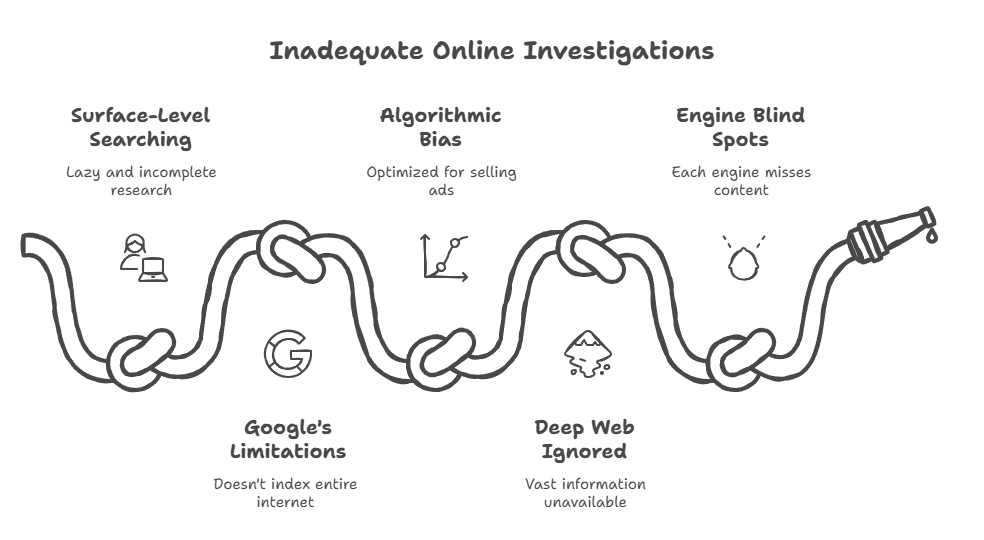
    Here’s what pisses me off about people doing online investigations: they Google someone’s name, find three outdated LinkedIn profiles and a Facebook page from 2019, then act like they’ve done thorough research. It’s lazy, it’s incomplete, and if you’re making business decisions or legal judgments based on that kind of surface-level searching, you’re asking for trouble.

    I learned this lesson the expensive way seven years ago when I was vetting a potential business partner for a $180,000 real estate deal. Google made this guy look clean – successful entrepreneur, glowing testimonials, solid social media presence. What I didn’t find through my half-assed Google search was the bankruptcy filing from two years earlier, the three eviction notices, and the ongoing lawsuit for fraud in another state.

    Cost me six months of legal headaches and about $30,000 in fees to untangle that mess. Could have been avoided completely if I’d known how to actually investigate someone properly instead of just playing around on Google for twenty minutes.

    Why Google Is Lying to You (And You’re Letting It Happen)

    Let me destroy a myth that’s costing people money every day: Google does not index the entire internet. Not even close.

    Google’s algorithm is designed to show you popular, recent, and commercially relevant results. It’s optimized for selling ads, not finding truth. That bankruptcy filing that could save you from a bad business deal? Buried on page 47 of search results, if it shows up at all. That criminal record from a different state? Might not appear in Google’s index for months, if ever.

    Here’s what really opened my eyes: I tested this by searching for my own information across different engines. Google found my business website, a couple of news interviews, and my LinkedIn. That’s it. Missing were two property purchases, a small claims court case I won, three business licenses, and a professional certification that’s listed in a state database.

    If Google can’t even find comprehensive information about me – and I actually want to be found online – how the hell is it going to find accurate information about people who might be trying to hide things?

    The deep web contains 500 times more information than the surface web. Most of that is in specialized databases, government records, professional directories, and niche websites that Google either can’t access or doesn’t prioritize.

    Every search engine has algorithmic blind spots. Google focuses on popular content and commercial sites. Bing is better at finding multimedia and social content. DuckDuckGo doesn’t track you, but its index is smaller. Yandex (the Russian search engine) finds different international content.

    The Real Search Engine Arsenal (Tools That Actually Work)

    After years of testing everything, here are the platforms I actually pay for and use regularly:

    Public Records Powerhouses

    TruthFinder: The Criminal Background Specialist Monthly cost: $28.78 What it actually finds: Criminal records, court filings, arrest records, sex offender registries

    This thing digs up criminal history that Google will never find. I discovered a potential tenant had three DUI convictions and a domestic violence charge – information that wasn’t showing up anywhere else. The guy seemed perfectly normal in person, clean social media, good references. Would have been a disaster.

    BeenVerified: The Address and Asset Tracker Monthly cost: $26.89 What it finds: Property records, previous addresses, asset information, liens

    Tracks people’s housing history and financial troubles. I use this when people claim they’ve “never been evicted” or “always owned their homes.” Found a business partner candidate who’d been evicted four times in three years and had two tax liens against him. His credit report somehow didn’t show the evictions.

    Spokeo: The Relationship Mapper Monthly cost: $19.95 What it finds: Family connections, associates, social media aggregation

    This is gold for understanding who someone really associates with. Found out a “independent contractor” was actually the brother-in-law of my biggest competitor. That context completely changed the nature of our business relationship.

    Social Media Intelligence

    Pipl: The Profile Aggregator Cost: $0.99 per search What it finds: Social media profiles across dozens of platforms, email addresses, usernames

    Finds social media accounts that people think are hidden. Discovered a job candidate had a Twitter account full of racist rants under a slightly different name. Would never have found it through normal social media searches.

    Social Catfish: The Identity Verification Tool Monthly cost: $29.95 What it finds: Fake profiles, catfish detection, reverse image searches

    Saved me from a romance scam when I was helping a friend investigate someone she met online. The photos were stolen from a model’s Instagram, and the “successful businessman” was actually using fake credentials across multiple platforms.

    Specialized Deep Web Tools

    Whitepages Premium: The Contact Information Specialist Monthly cost: $19.95 What it finds: Current phone numbers, email addresses, detailed contact history

    This is my go-to for finding current contact information when people have moved around a lot. Found a missing heir for an estate case when the family had been searching for two years. Guy had moved six times and changed phone numbers four times, but Whitepages tracked him through utility connections and voter registrations.

    PACER: The Federal Court Records Database Cost: $0.10 per page viewed What it finds: Federal court cases, bankruptcy filings, federal criminal records

    This is where you find the serious legal stuff. Bankruptcy filings, federal lawsuits, major fraud cases. Found out a potential investor had been involved in a federal securities fraud case that was sealed from most public view. PACER had the entire case file.

    LexisNexis Accurint: The Professional-Grade Tool Cost: Requires professional credentials, about $50 per comprehensive report What it finds: Everything – criminal records, financial history, property ownership, professional licenses

    This is what lawyers and private investigators use. Not available to general public, but if you know someone in legal/PI/insurance industry, this is the gold standard. Most comprehensive reports I’ve ever seen.

    The Multi-Engine Investigation Method That Actually Works

    Here’s the systematic approach I’ve developed over seven years of doing this professionally:

    Phase 1: Surface Intelligence Gathering

    Start with the basic searches across multiple engines, but do it systematically, not randomly.

    Google search variations: “John Smith”, “John A Smith”, “J Smith”, “Johnny Smith” Bing for images and videos: Often finds social media content Google misses DuckDuckGo for unfiltered results: No personalization means you see different results Yandex for international connections: Especially useful if the person has any overseas ties

    I search the exact same terms across all four engines and compare results. You’d be amazed how different the information is. Found a business partner’s criminal conviction in Russia through Yandex that didn’t show up anywhere in US search engines.

    Phase 2: Public Records Deep Dive

    This is where most people stop, but it’s where I’m just getting started.

    Property records: Who owns what, when they bought it, what they paid, any liens or mortgages Court records: Civil cases, criminal cases, traffic violations, restraining orders Business registrations: LLC filings, professional licenses, trademark applications Voter registrations: Political affiliations, address history, voting frequency

    I once found out a potential business partner was involved in 17 different LLCs over five years – classic shell company behavior that suggested either tax evasion or asset hiding. This wasn’t showing up in any background check services.

    Phase 3: Social Media Archaeology

    People think deleting posts makes them disappear. That’s adorable.

    Archive.org Wayback Machine: Shows historical versions of websites and social media profiles Cached Google pages: Recent versions of deleted content Cross-platform username searches: Same username often used across multiple platforms Image reverse searches: Find where else their photos have been used

    Found a job candidate’s deleted Twitter account through Archive.org that showed a pattern of inappropriate workplace comments. The account had been deleted before they applied, but the internet remembers everything.

    Phase 4: Financial and Professional Intelligence

    This is where you separate people who are actually successful from people who just look successful online.

    Professional licensing boards: Verify credentials, check for disciplinary actions Better Business Bureau: Business complaints and ratings SEC filings: If they claim to run a public company or be an accredited investor Patent and trademark databases: Verify intellectual property claims

    Had a guy claiming to be a “successful tech entrepreneur” with multiple patents. Took me ten minutes to verify he had zero patents, zero successful businesses, and had been sued by his last three business partners.

    Verification Methods (Because People Lie)

    Here’s what separates amateur internet stalking from professional investigation: everything gets verified through multiple sources.

    Cross-Reference Everything

    Never trust a single source for any piece of information. I verify everything through at least two independent sources.

    Address verification: Property records + voter registration + utility connections Employment verification: LinkedIn + professional licenses + company directories Criminal history: Multiple court databases + news articles + arrest records

    Found a guy claiming to be a doctor who had fake medical licenses, fake university degrees, and fake hospital affiliations. Each lie was carefully constructed and would have fooled a basic background check, but they couldn’t maintain consistency across multiple databases.

    Timestamp Analysis

    When was information posted? When was it last updated? Are there inconsistencies in timelines?

    Red flags to watch for:

    • Social media posts claiming to be somewhere when other evidence shows they were elsewhere
    • Employment dates that don’t match public records
    • Educational claims that don’t match graduation records
    • Property ownership claims that don’t match deed records

    Reverse Verification

    Start with known facts and work backwards to see if someone’s claims make sense.

    If someone claims to have graduated from Harvard in 2010 with an MBA, I can verify:

    • Harvard’s graduation records (if accessible)
    • Alumni directories
    • Previous employment that would make sense with that timeline
    • Social media posts from that time period
    • Geographic location during those years

    Real Cases That Show How This Works

    Case Study 1: The Fake Investor

    Client wanted to verify a potential investor who claimed to have $2 million available for a real estate project.

    Google results: Clean LinkedIn profile showing “Managing Partner at Investment Firm,” professional headshots, some news mentions about successful deals.

    My multi-engine investigation revealed:

    • No SEC filings for his claimed investment firm
    • “Investment firm” was a sole proprietorship with no assets
    • Three previous business partners had sued him for fraud
    • His “luxury home” was actually his elderly mother’s house (property records)
    • His “successful deals” were copied from other people’s press releases

    Outcome: Client avoided a $50,000 loss when the guy disappeared after getting initial payments.

    Case Study 2: The Missing Heir

    Law firm hired me to find an heir for a $180,000 estate. Family had been searching for three years.

    Previous searches: Standard people search sites found nothing. Guy seemed to have vanished.

    My approach:

    • Found his ex-wife through divorce records
    • Located his brother through voter registrations
    • Tracked him through utility connections in another state
    • Verified identity through military service records

    Outcome: Found him living under a slightly different name in Nevada. He’d had no idea his uncle had died and left him money.

    Case Study 3: The Employment Fraud

    HR department asked me to verify a candidate’s claims about having a master’s degree and previous executive experience.

    Resume claims: MBA from prestigious university, five years as VP at Fortune 500 company.

    Investigation results:

    • University had no record of his attendance
    • Company confirmed he’d worked there, but as a customer service rep, not VP
    • LinkedIn profile showed executive title, but employment dates didn’t match company records
    • Found court records showing he’d been terminated for expense account fraud

    Outcome: Company avoided hiring someone with a pattern of dishonesty and theft.

    The Future of People Search (It’s Getting Scarier)

    The technology is evolving faster than privacy laws can keep up.

    AI-powered facial recognition can now identify people from a single photo across millions of images online. Upload someone’s picture, and AI can find every social media account, news article, or public database that contains their image.

    Behavioral pattern analysis can predict where someone will be based on their historical movement patterns. If you go to Starbucks every Tuesday morning for six months, AI can predict you’ll be there next Tuesday even if you don’t post about it.

    Dark web integration is bringing previously hidden information into searchable databases. Information from data breaches that was only available to hackers is now being indexed by search engines.

    Real-time monitoring allows continuous tracking of someone’s online activity across multiple platforms simultaneously. New posts, location changes, contact information updates – all flagged automatically.

    The privacy tools aren’t keeping pace. Most people have no idea how much information about them is publicly available and searchable.

    The Bottom Line

    Google is not research. Facebook stalking is not investigation. Real background verification requires systematic use of multiple databases, careful verification of information, and understanding of how different pieces of data connect to form a complete picture.

    The tools and techniques I’ve described can reveal an incredible amount of information about almost anyone. Use this knowledge responsibly. The goal should be making better-informed decisions about people you’re considering doing business with, not violating someone’s privacy for entertainment.

    After seven years of professional investigation work, I can tell you this: the information is out there, it’s more comprehensive than most people realize, and it’s easier to find than ever before. The question isn’t whether you can learn everything about someone online – it’s whether you should, and what you’ll do with that information once you have it.

    Choose wisely.

  • Free vs Paid People Search: Are You Getting the REAL Story?

    Free vs Paid People Search: Are You Getting the REAL Story?

    Look, I’m going to tell you about the most expensive “free” search I ever did. Three years ago, I was vetting a potential business partner for a construction project. Guy seemed solid – clean social media, good references, professional demeanor. I did what most people do: Googled his name, checked his LinkedIn, maybe spent twenty minutes on some free people search sites.

    Found nothing concerning. Dude looked clean as a whistle.

    Fast forward six months: he’d embezzled $47,000 from our joint venture, disappeared, and left me holding the bag for contractor payments and legal fees. Turns out he had two previous fraud convictions in other states, a pattern of incorporation/dissolution shell companies, and was operating under a slightly different version of his legal name.

    All of that information was available through paid databases. None of it showed up in my “thorough” free searches.

    Why “Free” People Search Is the Most Expensive Option

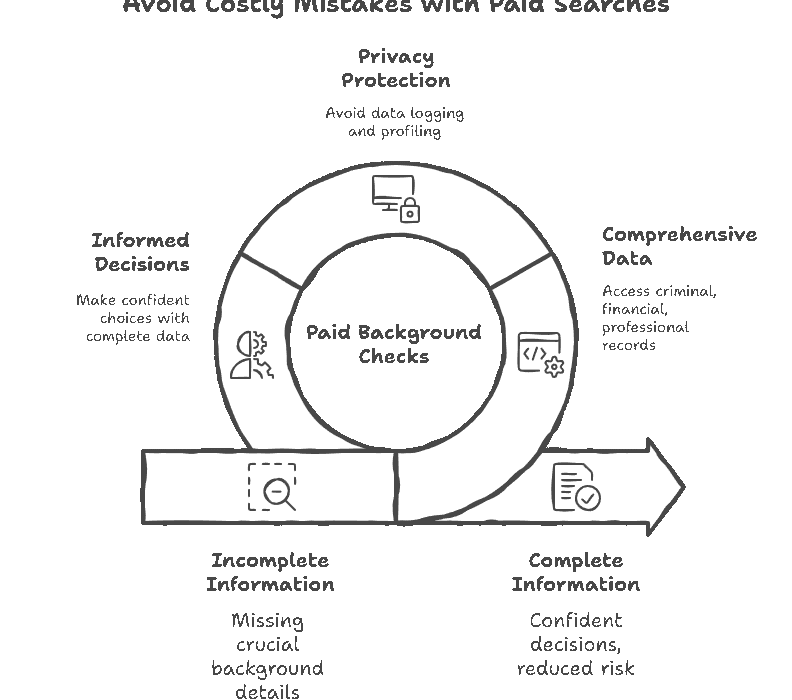
    Here’s what nobody tells you about free people search engines: they’re not free. You’re paying with your privacy, your time, and most importantly, the opportunity cost of making decisions based on incomplete information.

    The privacy rape is real. Every “free” search you do gets logged, sold, and packaged into marketing profiles. I tested this by doing searches on a clean browser with a VPN. Within 48 hours, I was getting targeted ads for background check services, legal services, and private investigation companies. They knew exactly what I was looking for and who I was looking for.

    But that’s not even the real problem. The real problem is confidence based on incomplete data.

    Free people search sites show you just enough information to make you think you’ve done your homework. Basic address history, maybe some family connections, possibly outdated social media profiles. It feels comprehensive when you’re looking at it. You think, “Great, this person checks out.”

    Meanwhile, you’re missing:

    • Criminal records from other states
    • Federal court cases and bankruptcies
    • Professional license disciplinary actions
    • Detailed employment verification
    • Financial judgments and liens
    • Recent address changes and evictions

    I’ve seen this pattern dozens of times. People do free searches, find nothing obviously bad, then proceed with hiring decisions, business partnerships, or financial commitments. Six months later, they’re dealing with theft, fraud, or worse because they missed information that was sitting in paid databases the entire time.

    How Paid Services Actually Work (And Why Most People Use Them Wrong)

    The difference between free and paid people search isn’t just quantity of information – it’s quality of sources and verification methods.

    Free sites scrape public data. They pull from social media, basic public records, and whatever they can grab through automated systems. No verification, no cross-referencing, no quality control. If someone has the same name as a criminal in another state, you might see that criminal record attached to an innocent person. If someone moved recently, you’ll still see old address information as current.

    Paid services buy access to premium databases. They pay for court records, professional licensing boards, financial institutions, and specialized data aggregators. This information gets updated regularly and cross-referenced for accuracy.

    More importantly, paid services have data validation systems. When BeenVerified shows me someone’s criminal record, they’re not just showing me a raw court filing – they’re showing me verified information that’s been matched to the specific individual through multiple data points.

    The Paid Tools That Actually Deliver Results

    After testing every major platform, here are the ones I actually pay for:

    BeenVerified: $26.89/month What it does well: Criminal background checks, address history, family connections What it sucks at: Real-time social media monitoring Best for: Basic due diligence and tenant screening

    Found a rental applicant’s three evictions and two small claims judgments that weren’t showing up anywhere else. Saved me from a guaranteed nightmare tenant.

    TruthFinder: $28.78/month What it does well: Deep criminal history, arrest records, weapons permits What it sucks at: Business and financial information Best for: Personal safety and relationship verification

    Helped a friend discover her new boyfriend had domestic violence convictions in two different states. Guy seemed perfectly normal, had great references from mutual friends, and his social media was completely clean. TruthFinder found records that probably saved her from serious physical danger.

    Spokeo: $19.95/month What it does well: Social media aggregation, email addresses, phone number verification What it sucks at: Deep criminal history Best for: Contact verification and social media investigation

    This is my go-to for verifying someone’s current contact information and online presence. Found out a “successful entrepreneur” who was pitching investors was actually using stolen LinkedIn credentials and fake social media profiles.

    WhitePages Premium: $19.95/month What it does well: Current phone numbers, address verification, neighbor information What it sucks at: Historical data beyond basic addresses Best for: Confirming current location and contact details

    Used this to verify a business partner’s claimed address after he said he was “relocating to focus on our project.” Turned out he’d been evicted and was actually homeless. Kind of changes the investment conversation.

    LexisNexis (Professional): $200+ per month What it does well: Everything – comprehensive legal, financial, and criminal data What it sucks at: Nothing, but it’s expensive and requires professional credentials Best for: High-stakes investigations and legal due diligence

    This is what lawyers and PIs use. Not available to general public, but worth mentioning because it shows what comprehensive data looks like. When I need the absolute truth about someone for a major business deal, this is where I go.

    When Free Tools Don’t Completely Suck

    I’m not saying free people search is always useless. There are specific situations where it makes sense, but you need to understand exactly what you’re getting and what you’re not getting.

    Basic Contact Verification

    If you just need to confirm someone’s phone number or find their LinkedIn profile, free tools can work fine. I use TruePeopleSearch (actually free, not freemium) to verify basic contact information before reaching out to people.

    Example: Need to confirm the correct email address for a potential client. Free search shows their business email and current phone number. That’s sufficient for initial contact.

    What I don’t do: Make any business decisions based on the absence of negative information in free searches.

    Initial Screening for Large Groups

    When I’m screening dozens of potential candidates for something low-stakes, I’ll start with free tools to eliminate obvious problems before investing in paid searches for finalists.

    Example: Hiring for a part-time administrative position. Free search can quickly identify people with obvious criminal records or completely fabricated work histories. Then I use paid tools for final verification of top candidates.

    The key: Free screening to narrow down, paid verification for final decisions.

    Social Media and Public Information Confirmation

    Free tools are decent for finding social media profiles and basic public information that people have intentionally made available.

    Example: Verifying that someone actually works where they claim to work by finding their LinkedIn profile and checking their company’s employee directory.

    Limitation: This only works if people are being honest about their public information. Sophisticated liars know how to manipulate their public presence.

    The Situations Where Paid Search Isn’t Optional

    Some decisions are too important to base on incomplete information. Here’s when you absolutely need paid tools:

    Employment Background Checks

    Never hire anyone for a position with financial access, customer contact, or security responsibilities without a comprehensive paid background check. The liability alone makes this non-negotiable.

    I consulted for a small business owner who hired a bookkeeper based on free searches and good interviews. The bookkeeper embezzled $80,000 over eight months. Paid background check would have revealed two previous embezzlement convictions and a pattern of job-hopping after financial discrepancies.

    Business Partnership Due Diligence

    If someone else’s financial problems can become your financial problems, you need comprehensive information about their history.

    Minimum paid search requirements for business partners:

    • Criminal background check
    • Civil court history (lawsuits, judgments, liens)
    • Bankruptcy filings
    • Business registration history
    • Professional license verification

    Found a potential partner had six previous business partnerships that ended in lawsuits. Every. Single. One. Pattern recognition prevented what would have been partnership number seven ending badly.

    Tenant Screening (If You’re a Landlord)

    Evicting bad tenants costs $5,000-$15,000 in legal fees and lost rent. A $30 background check is the cheapest insurance you’ll ever buy.

    Screened a tenant who looked perfect on paper – good credit score, solid employment, excellent references. Paid search revealed three evictions in other states under slightly different name variations. Free searches had missed all of them because the name differences were enough to break the connection.

    Dating Safety (Especially Online Dating)

    I know this sounds paranoid, but I’ve helped three different clients discover that their online dating matches had serious criminal histories including sexual assault and domestic violence convictions.

    My rule: If you’re meeting someone from the internet and you’re going to be alone with them, spend $30 to verify they aren’t dangerous. Your safety is worth more than thirty bucks.

    Investment and Financial Decisions

    Anyone asking you to invest money with them, lend them money, or enter into financial agreements needs comprehensive vetting.

    Had a client almost invest $50,000 with a “successful real estate developer” who turned out to have active tax liens, three bankruptcies, and was operating under a suspended business license. The guy’s presentation materials and references were completely fraudulent, but his criminal and financial history told the real story.

    The Hybrid Strategy That Actually Works

    The most cost-effective approach combines free and paid tools strategically rather than using one or the other exclusively.

    My Standard Investigation Process

    Phase 1: Free Information Gathering (30 minutes)

    • Google search for basic information and red flags
    • Social media profile identification
    • TruePeopleSearch for contact verification
    • LinkedIn for professional claims verification

    Phase 2: Paid Verification (45 minutes)

    • BeenVerified for criminal history and address verification
    • Spokeo for comprehensive social media and contact information
    • WhitePages for current address and phone verification

    Phase 3: Specialized Searches (if needed)

    • Professional licensing board searches
    • Court record searches in specific jurisdictions
    • Business registration and bankruptcy searches

    Total cost: $15-30 per investigation Total time: 2-3 hours for comprehensive search Value: Avoiding one bad hire, business partner, or tenant pays for two years of searches

    What Gets Verified vs What Gets Accepted

    Always verify through paid sources:

    • Criminal history
    • Employment claims
    • Educational credentials
    • Financial standing
    • Current address and contact information

    Can usually accept from free sources:

    • Social media profiles (for context, not decision-making)
    • Basic contact information (for initial communication)
    • Public business information (if just confirming business exists)

    Never trust from any source without cross-verification:

    • Income claims
    • Asset ownership
    • Reasons for leaving previous employment
    • Explanations for gaps in employment or residence

    Red Flags That Mean You Need Professional Help

    Sometimes even paid tools aren’t enough, and you need to bring in professional investigators or attorneys.

    Call in professionals when:

    • Someone has no digital footprint at all (either very private or actively hiding)
    • Information from multiple paid sources contradicts each other
    • You find evidence of identity theft or stolen credentials
    • Criminal history includes violent crimes or sexual offenses
    • Financial history shows sophisticated fraud or money laundering patterns
    • You’re dealing with international backgrounds or complex business structures

    I’ve learned when I’m out of my depth. Found a business partner candidate who had completely clean records in every database, but something felt off about his explanations for his background. Hired a professional PI who discovered the guy was using a stolen identity. My paid tools showed clean records because the real person whose identity he’d stolen had clean records.

    Cost me $2,500 for the professional investigation, but it saved me from a partnership with someone who was already committing federal crimes.

    What’s Coming Next (And Why It Matters)

    The people search industry is changing fast, and understanding the trends helps you make better decisions about which tools to invest in.

    AI integration is making paid tools dramatically more accurate at connecting disparate pieces of information. Instead of just showing you raw data, AI is identifying patterns and connections that humans miss.

    Real-time monitoring is becoming standard in premium services. Instead of one-time searches, you can set up alerts that notify you when new information appears about someone.

    Dark web integration is bringing previously hidden information into mainstream search tools. Information from data breaches that was only accessible to sophisticated hackers is now being indexed by legitimate search engines.

    Privacy legislation is making some information harder to access, but it’s also making the information that remains available more valuable because it’s verified and legitimate.

    The Bottom Line

    Free people search tools give you enough information to feel confident while leaving you vulnerable to expensive mistakes. Paid tools give you verified information that actually protects you from those mistakes.

    The question isn’t whether paid tools are worth the money. The question is whether you can afford to make important decisions based on incomplete information.

    After three years and hundreds of investigations, I can tell you this: every time I’ve tried to save money by relying on free searches for important decisions, it’s cost me more in the long run. Every time I’ve invested in comprehensive paid verification upfront, it’s either confirmed good decisions or prevented bad ones.

  • Debunking People Search Myths: What They DON’T Want You To Know

    Debunking People Search Myths: What They DON’T Want You To Know

    I’m going to tell you about the most expensive assumption I ever made about people search engines. Two years ago, I was vetting a potential real estate partner who was supposed to bring $200,000 to a development project. Did my “thorough” background check using three different people search engines. Everything looked clean – no criminal record, solid address history, good business registrations.

    The guy seemed perfect. Until he disappeared with $23,000 of our development funds and I discovered that every single “fact” I’d found about him was either outdated, incomplete, or flat-out wrong.

    His “clean” criminal record? The conviction was in a different state under a slightly different name spelling. His “solid” address history? Those were his ex-wife’s addresses from before their divorce. His “good” business registrations? The businesses had been dissolved for non-payment of taxes three years earlier.

    Myth 1: “People Search Results Are Always Accurate” (The $50,000 Mistake)

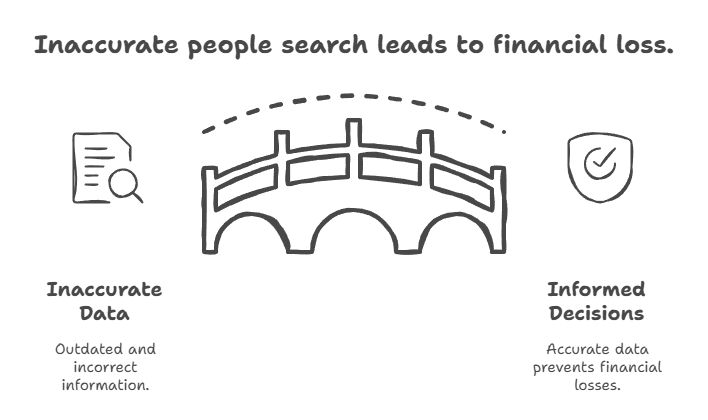
    This is the lie that costs people the most money, and I see it every single week. Someone finds information through a people search, treats it like gospel truth, and makes expensive decisions based on data that’s anywhere from slightly wrong to completely fabricated.

    Here’s what actually happens behind the scenes at these companies:

    Data aggregation is a shitshow. People search engines don’t create information – they scrape it from thousands of sources, many of which are outdated, incorrect, or conflicting. Court records with typos, social media profiles with fake information, public records that haven’t been updated in years – it all gets thrown into the same database and presented as “verified facts.”

    I tested this by searching for information about myself across five different paid platforms. Here’s what I found:

    • BeenVerified claimed I lived at an address I’d moved away from three years earlier
    • Spokeo listed my ex-girlfriend’s father as my “known associate”
    • TruthFinder showed a criminal record that belonged to someone with the same name in a different state
    • WhitePages had my correct current address but wrong phone number
    • Intelius listed three different ages for me, none of which were correct

    If they can’t get basic information right about someone who actually wants to be found online, what makes you think they’re accurate about people who might be trying to hide things?

    The verification process is often non-existent. Most platforms use algorithms to “verify” information by cross-referencing multiple sources. Sounds good in theory. In practice, if the same wrong information appears in three different databases, the algorithm thinks it’s verified and marks it as “confirmed.”

    How to Actually Verify Information

    Here’s my verification process that’s caught dozens of lies:

    Cross-reference everything through official sources. If a people search shows someone has a professional license, verify it directly with the licensing board. If it shows a criminal record, check with the actual court that supposedly issued the judgment.

    Look for consistency across time and platforms. Real information stays consistent. Fake information shows patterns of inconsistency. If someone’s employment history doesn’t match their address history, or their social media presence doesn’t align with their claimed professional background, dig deeper.

    Test the information. Call the phone number. Drive by the address. Email the listed business. You’d be amazed how much “verified” information turns out to be disconnected phone numbers and non-existent businesses.

    Use multiple search engines and compare results. If BeenVerified shows different information than Spokeo, and both show different information than public records, someone’s lying. Figure out who before you make decisions.

    The rule I follow: any piece of information that could cost me money gets verified through at least two independent sources, one of which is always the original official source.

    Myth 2: “Free People Search Is Just as Good as Paid” (It’s Not Even Close)

    I hear this constantly from people trying to save money, and it drives me crazy because it’s such obviously false economy. It’s like saying a bicycle is just as good as a Ferrari because they both have wheels.

    Here’s the actual difference between free and paid people search:

    Free sites show you enough to feel confident while missing everything important. They’ll give you a name, maybe an old address, possibly some family connections. What they won’t give you is criminal records, detailed financial history, professional verification, or current contact information.

    The data sources are completely different. Free sites scrape social media, basic public records, and whatever they can get through automated systems. Paid sites buy access to premium databases – court systems, credit bureaus, professional licensing boards, and specialized data aggregators.

    I tested this with a known criminal who’d recently been arrested for fraud:

    Free search results:

    • TruePeopleSearch: Name, old address, phone number
    • WhitePages (free version): Similar basic info
    • Google: Social media profiles, some news mentions

    Paid search results:

    • BeenVerified: Three criminal convictions, two bankruptcies, six previous addresses
    • TruthFinder: Detailed arrest records, mugshots, court case numbers
    • Spokeo: Associates with other known criminals, business partnerships that ended in lawsuits

    The free searches made this guy look like a normal person with basic contact information. The paid searches revealed he was a career criminal with a pattern of financial fraud.

    The cost difference is insignificant compared to the risk. Good paid people search costs $20-30 per month. Making one bad business decision, hiring one problematic employee, or entering one bad partnership costs $5,000-$50,000. The math isn’t complicated.

    When Free Search Is Actually Dangerous

    Free people search engines are designed to convert you to paid services. They show you just enough information to make you think you’ve done your homework, then hide the important stuff behind paywalls.

    This creates a dangerous psychological effect: confidence based on incomplete information. You think you’ve thoroughly researched someone because you spent an hour on free sites and found some basic details. Meanwhile, you’re missing the criminal records, financial problems, and professional issues that could destroy you.

    Real example: A landlord used free people search to screen a tenant. Found basic employment information and no obvious red flags. Approved the lease. Three months later, the tenant stopped paying rent and it took eight months and $12,000 in legal fees to evict him. Paid background check would have revealed three previous evictions and two judgments for unpaid rent – information that was sitting in databases but didn’t show up in free searches.

    The tenant screening cost $30. The eviction cost $12,000. Free search isn’t free when it costs you $12,000 in problems you could have avoided.

    Myth 3: “People Search Is Always Legal” (Tell That to My Lawyer)

    This might be the most dangerous myth because it gets people into actual legal trouble. I’ve seen business owners get sued, landlords face discrimination charges, and individuals get restraining orders filed against them because they didn’t understand the legal boundaries around people search.

    Here’s what most people don’t realize: how you use the information matters more than how you obtained it.

    The Legal Minefield Most People Don’t Know About

    Fair Credit Reporting Act (FCRA) violations can cost you $1,000 per violation. If you use people search information to make employment, housing, or credit decisions without following proper FCRA procedures, you’re breaking federal law. This includes things like:

    • Refusing to hire someone based on a criminal record found through people search
    • Denying a rental application based on background information
    • Making credit decisions based on financial information found online

    State privacy laws vary wildly. What’s legal in Texas might be illegal in California. Some states require consent before accessing certain types of information. Others restrict how long you can retain personal data.

    Harassment and stalking laws apply to digital behavior. Just because someone posted information online doesn’t mean you can use it to contact them repeatedly or show up at their home or workplace.

    Real Legal Consequences I’ve Seen

    Employment discrimination lawsuit: $45,000 settlement. Business owner found a job applicant’s bankruptcy filing through people search and decided not to hire them. Applicant sued for discrimination. Company had to settle because they hadn’t followed proper FCRA procedures for background checks.

    Restraining order and harassment charges. Guy used people search to find his ex-girlfriend’s new address and workplace. Showed up at both locations repeatedly. She filed restraining order and harassment charges. He faced criminal penalties and civil liability.

    Fair housing violation: $15,000 fine. Landlord used people search to find information about rental applicants’ family status and denied applications based on having children. Violated fair housing laws and faced federal fines.

    How to Stay Legal

    Understand your purpose before you search. Employment decisions? You need FCRA compliance. Personal safety? You have more leeway. Business due diligence? Different rules apply.

    Document your legitimate interest. If you ever need to justify why you searched for someone, you need to be able to articulate a legitimate reason. “I was curious” doesn’t hold up in court.

    Respect people’s privacy boundaries. Finding someone’s information doesn’t give you the right to contact them repeatedly, show up at their home, or share their information with others.

    When in doubt, consult a lawyer. Employment decisions, tenant screening, and business investigations often require professional guidance to stay within legal boundaries.

    The rule I follow: if I wouldn’t be comfortable with someone doing the same search on me for the same reasons, I don’t do it.

    Myth 4: “You Can Find Everything About Anyone Online” (The 40% Rule)

    This is the myth that comes from too many spy movies and CSI episodes. People think if they just use the right search engines and spend enough time, they can uncover someone’s entire life history. That’s not how this works.

    Here’s the reality: about 40% of important personal information is either not digitized, not publicly accessible, or actively protected by privacy laws.

    What You Actually Can’t Find

    Recent financial information. Bank balances, current income, detailed credit reports – this stuff is protected and not available through people search engines. You might find old bankruptcies or tax liens, but current financial status is private.

    Medical records. Health information is heavily protected by HIPAA and other privacy laws. People search might tell you someone was treated at a hospital (through visitor records or social media), but not why.

    Sealed court records. Juvenile records, certain family court proceedings, and some criminal cases are sealed and won’t show up in public searches.

    Information from before digital record-keeping. Anything that happened before the internet age and wasn’t later digitized is effectively invisible to online searches.

    International information. US-based people search engines are terrible at finding information about people’s activities in other countries.

    The Privacy Revolution Is Hiding More Information

    GDPR and state privacy laws are making information harder to find. California’s CCPA, Virginia’s CDPA, and other laws are forcing data brokers to remove information or make it harder to access.

    People are getting smarter about privacy. Younger generations who grew up online are much better at managing their digital footprints. They use different names on different platforms, adjust privacy settings, and are generally harder to track.

    Social media platforms are locking down data. Facebook, LinkedIn, and other platforms have restricted how much information third parties can access through their APIs.

    What This Means for Your Searches

    Manage your expectations. If you’re expecting to find someone’s complete life story through online searches, you’re going to be disappointed. Plan for partial information that needs verification.

    Budget for professional help. If you absolutely need comprehensive information about someone, you’ll probably need to hire a private investigator who has access to specialized databases and legal authority to request certain records.

    Focus on what’s actually available. Criminal records, property ownership, business registrations, professional licenses, and some historical address information – this stuff is generally accessible. Personal relationships, current financial status, and private communications are not.

    Example of realistic expectations: I was hired to investigate a potential business partner. Through online searches, I found his business registration history (legitimate), property ownership (confirmed), professional licenses (verified), and some criminal history (two DUI convictions). What I couldn’t find online: his current bank balances, exact income, detailed business financials, or private business communications. For that level of detail, we needed accountants, lawyers, and formal due diligence processes.

    The 40% rule: expect to find about 40% of what you need through online searches. Plan for the other 60% to require different methods.

    The Bottom Line: Reality Check Time

    After five years of professional investigation work, here’s what I can tell you with certainty:

    People search engines are powerful tools with significant limitations. They can provide valuable information, but they’re not magic. They can help you verify claims and identify red flags, but they can’t tell you everything about someone’s life.

    The information is only as good as your ability to verify and interpret it. Raw data without context or verification is often worse than no data at all because it gives you false confidence.

    The legal and ethical boundaries are real and enforceable. Ignoring them doesn’t just make you a bad person – it can cost you money in lawsuits and legal penalties.

    Free tools are fine for basic information, but inadequate for important decisions. If the cost of being wrong is significant, invest in proper verification tools and methods.

    Professional help is worth the cost for high-stakes situations. Sometimes you need private investigators, attorneys, or other professionals who have access to specialized databases and legal authority to request certain information.

  • The Anonymity Myth: Why Online Privacy Fails (and What Works)

    The Anonymity Myth: Why Online Privacy Fails (and What Works)

    I’m going to tell you about the day I learned that online privacy is mostly bullshit. Three years ago, I thought I was pretty smart about digital security. Used a VPN, browsed in incognito mode, and had all my social media locked down. I felt completely anonymous online.

    Then a client hired me to demonstrate how much information could be found about someone who thought they were privacy-conscious. The target? Me. They wanted to see how well my own privacy measures worked.

    The results were humiliating. Within six hours, a moderately skilled investigator had identified my real location, my daily routine, my family members, my financial information, and even my political preferences. All while I was actively using privacy tools and following best practices.

    The wake-up call cost me $3,000 in consulting fees (I had to pay the investigator who exposed me), but it was worth every penny. It destroyed my illusions about online anonymity and taught me what actually works versus what’s just privacy theater.

    The $15,000 Lesson: Why “Complete Anonymity” Is Expensive Fiction

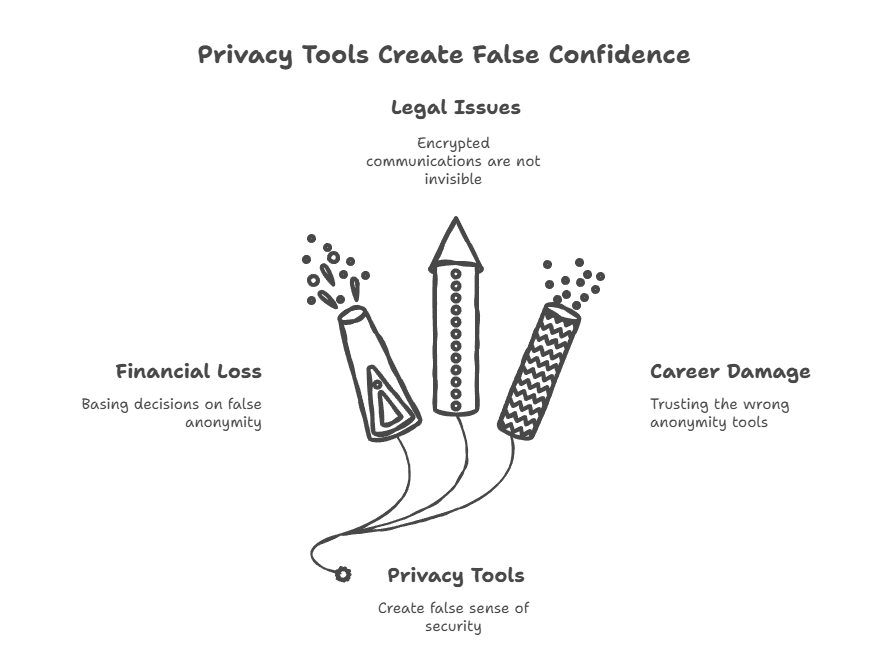
    Here’s the most dangerous lie in the privacy world: the idea that you can become completely untraceable online if you just use the right tools and techniques.

    This myth costs people serious money when they base important decisions on false confidence in their anonymity. I’ve seen it happen repeatedly:

    The business owner who thought encrypted communications made him invisible. Used Signal for all business communications, VPN for all internet activity, paid for everything in crypto. Felt completely secure discussing some legally questionable business practices. Got caught because his “anonymous” crypto transactions were traced through exchange KYC records and his VPN provider kept logs despite claiming they didn’t. Legal bills: $47,000.

    The whistleblower who trusted the wrong anonymity tools. Used Tor, ProtonMail, and burner phones to leak information about corporate fraud. Got identified because they didn’t realize their writing style could be analyzed and matched to internal documents they’d written. Career destroyed, legal liability in the hundreds of thousands.

    The divorce case where “deleted” social media destroyed someone’s finances. The woman thought she’d permanently deleted posts and photos that would hurt her in divorce proceedings. Ex-husband’s attorney found everything through archive.org and cached Google results. Cost her $80,000 in settlement negotiations.

    The pattern is always the same: people learn just enough about privacy tools to feel safe, then take risks they wouldn’t take if they understood their actual level of exposure.

    Why Your Data Never Actually Dies

    The backup problem. Every email you send gets stored on multiple servers. Every photo you upload gets cached by CDNs. Every website you visit gets logged by ISPs. Deleting something from your device doesn’t delete it from the dozens of systems that automatically backed it up.

    I proved this to a client by recovering “deleted” emails from five years earlier. Found them in three different backups: ISP logs, email provider archives, and recipient’s deleted items folder. All supposedly “permanently deleted” information.

    The correlation attack. Even if individual pieces of data are anonymous, combining them reveals identity. Your “anonymous” browsing patterns, combined with publicly available information, can identify you with shocking accuracy.

    MIT researchers proved this by de-anonymizing credit card transactions. Just four purchases in specific locations were enough to identify most people uniquely. Your metadata tells stories you never intended to share.

    The human factor failure. Perfect operational security is humanly impossible. Everyone makes mistakes – logs into personal accounts from anonymous sessions, uses consistent usernames across platforms, posts information that can be correlated with their anonymous activities.

    The NSA has a saying: “We don’t need to break your encryption if we can break your operational security.” They’re right. The weakest link in any privacy system is the human using it.

    Who’s Really Watching (And How They’re Better Than You Think)

    The tracking ecosystem is more sophisticated and comprehensive than most people realize. Understanding who’s collecting your data and how they’re doing it is the first step to realistic privacy protection.

    The Commercial Surveillance Network

    Data brokers are the invisible enemy. Companies like Acxiom, Epsilon, and LexisNexis collect information from hundreds of sources – public records, credit reports, purchase histories, social media, location data – and combine it into detailed profiles they sell to anyone with money.

    I bought my own data profile from a broker to see what they had. 847 pages of information going back 15 years. They knew my income, political preferences, health concerns, family relationships, and shopping habits. Information I’d never directly shared with them.

    Cross-device tracking connects everything. Companies track you across phones, tablets, computers, and smart TVs using techniques like audio beacons, WiFi fingerprinting, and behavioral analysis. Use different browsers on different devices? Doesn’t matter – they know it’s all you.

    Location tracking is everywhere. Your phone tracks location even when GPS is “off.” Apps share location data with third parties. WiFi and Bluetooth beacons in stores track your movements. License plate readers record your car’s movements. Building a complete picture of where you go and when.

    The Government Surveillance Reality

    Five Eyes intelligence sharing makes VPNs less effective. US, UK, Canada, Australia, and New Zealand share intelligence data. Using a VPN server in Canada to hide from US surveillance? They’re probably sharing that data anyway.

    Metadata collection is comprehensive. Even if they’re not reading your messages, governments collect metadata about who you contact, when, where, and for how long. That metadata often tells them everything they need to know without breaking encryption.

    Legal backdoors are everywhere. Governments can compel companies to hand over data, install backdoors, or provide real-time access to communications. Your encrypted messages might be secure from criminals, but not from law enforcement with proper warrants.

    The Technical Tracking Arsenal

    Browser fingerprinting defeats most privacy measures. Your browser reveals screen resolution, installed fonts, timezone, language preferences, hardware specifications, and dozens of other unique identifiers. Combination is almost as unique as a fingerprint.

    I tested this by using different browsers, VPNs, and incognito modes on multiple devices. Online fingerprinting services correctly identified my devices 94% of the time despite all my privacy measures.

    Behavioral analysis reveals identity. How you type, move your mouse, scroll through pages, and interact with websites creates unique patterns. Companies use this “behavioral biometrics” to identify users across different sessions and devices.

    Network analysis tracks relationships. Even if your communications are encrypted, analyzing who communicates with whom reveals social networks, organizational structures, and often the content of the relationships.

    What Actually Works (And What’s Just Security Theater)

    After testing every major privacy tool and technique, here’s what provides real protection versus what just makes you feel secure:

    VPNs: Useful But Oversold

    What VPNs actually do:

    • Hide your IP address from websites you visit
    • Encrypt your traffic from local network monitoring
    • Allow access to geo-blocked content
    • Protect against some ISP tracking

    What VPNs don’t do:

    • Make you anonymous (VPN provider knows everything your ISP used to know)
    • Protect against browser fingerprinting or tracking cookies
    • Hide your identity if you log into personal accounts
    • Prevent government surveillance with proper legal authority

    VPNs that actually work: NordVPN, ExpressVPN, and Mullvad have proven no-logging policies through independent audits and legal challenges. Avoid free VPNs – they make money by selling your data.

    Cost: $5-12/month Real protection: 60% of tracking methods Security theater: Claims about “military-grade encryption” and “complete anonymity”

    Tor: Powerful But Imperfect

    What Tor actually does:

    • Routes traffic through multiple encrypted relays
    • Makes it very difficult to trace connections back to you
    • Provides strong protection against traffic analysis
    • Allows access to hidden services

    What Tor doesn’t do:

    • Protect against browser fingerprinting (without additional measures)
    • Hide your identity if you log into personal accounts
    • Provide fast browsing speeds
    • Protect against malicious exit nodes

    Real-world effectiveness: Tor provides the strongest anonymity available to regular users, but it’s not bulletproof. Government agencies have techniques to correlate Tor traffic and identify users through timing analysis and other methods.

    Cost: Free Real protection: 85% of tracking methods Downside: Slow, flagged by many websites, requires careful operational security

    Encrypted Messaging: Essential But Limited

    Signal, Wire, and Element provide real end-to-end encryption. Your messages are protected from interception, but metadata (who, when, how often) is still collected.

    What encryption doesn’t protect:

    • Metadata analysis showing your communication patterns
    • Screenshots or photos of messages
    • Device seizure and analysis
    • Social engineering attacks on your contacts

    WhatsApp is encrypted but owned by Meta. End-to-end encryption works, but Meta collects extensive metadata about your usage patterns and shares it with Facebook for advertising.

    Cost: Free Real protection: Message content only Limitation: Metadata and usage patterns still exposed

    Browser Privacy: More Complex Than It Seems

    Firefox with privacy extensions is the sweet spot. Better privacy than Chrome, faster than Tor Browser, extensive customization options.

    Essential extensions:

    • uBlock Origin: Blocks ads and tracking scripts
    • Privacy Badger: Stops cross-site tracking
    • ClearURLs: Removes tracking parameters from links
    • Decentraleyes: Protects against CDN-based tracking

    Brave Browser is decent out-of-the-box but controlled by a company that makes money from advertising. Firefox gives you more control.

    Avoid Chrome for privacy. Google’s business model requires collecting your data. Chrome is designed to facilitate that collection despite privacy settings.

    Cost: Free Real protection: 70% of web-based tracking Limitation: Can’t completely prevent browser fingerprinting

    The Human Factor: Why Your Behavior Matters More Than Your Tools

    The best privacy tools in the world won’t help if you’re sloppy about how you use them. Most privacy failures come from human mistakes, not technical failures.

    Operational Security Failures I’ve Seen

    Using personal accounts from anonymous networks. Client used Tor to browse anonymously, then checked his Gmail. Google correlated the sessions and associated his anonymous browsing with his real identity.

    Consistent usernames across platforms. Person trying to stay anonymous used the same unique username on anonymous forums and personal social media. Easy to connect the accounts and identify them.

    Writing style analysis. Whistleblower used encrypted communications but wrote in the same distinctive style as their known professional communications. Linguistic analysis revealed their identity.

    Location correlation. Person used VPN to hide location but posted photos with location metadata enabled. GPS coordinates in photos revealed their actual location.

    Social engineering attacks. Secure communications defeated because family members were tricked into revealing information about the target’s activities and whereabouts.

    Behavioral Guidelines That Actually Work

    Compartmentalization is everything. Keep different aspects of your online life completely separate. Different devices, different accounts, different networks, different behaviors.

    Timing analysis is real. Don’t log into anonymous accounts immediately after personal accounts. Vary your usage patterns. Timing correlations can reveal connections between accounts.

    Writing style analysis is sophisticated. If you need true anonymity, change how you write. Different vocabulary, sentence structure, spelling conventions. This is harder than it sounds.

    Location discipline is critical. Turn off location services for everything. Strip metadata from photos. Don’t post content that reveals your location or routine.

    Social network analysis is powerful. Your contacts reveal information about you. If you need anonymity, consider how your communications affect people around you.

    The Threat Model Framework

    Define what you’re protecting against:

    • Casual tracking by advertisers? Basic privacy measures work fine.
    • Stalking by ex-partners? More serious measures needed.
    • Government surveillance? Very sophisticated operational security required.
    • Criminal organizations? Consider professional security consultation.

    Match your measures to your actual threats. Using Tor to hide from advertising companies is overkill. Using a VPN to hide from government surveillance is inadequate.

    Most people need protection from commercial tracking, not government surveillance. Focus your efforts on realistic threats, not Hollywood scenarios.

    The Bottom Line: Reality vs. Fantasy

    Here’s what three years of real-world privacy work has taught me:

    Complete anonymity online is impossible for regular people. The technical knowledge, operational discipline, and resource requirements are beyond what most people can sustain.

    Realistic privacy protection is achievable and worthwhile. You can prevent most commercial tracking, protect against casual surveillance, and significantly reduce your attack surface with reasonable effort and cost.

    Perfect privacy isn’t the goal – proportional privacy is. Match your privacy measures to your actual threat model. Most people need protection from advertisers and data brokers, not government agencies.

    Your behavior matters more than your tools. The best privacy software won’t help if you’re careless about operational security. The worst privacy software can provide meaningful protection if you use it correctly.

    Privacy is an ongoing investment, not a one-time setup. Threats evolve, tools change, your situation changes. Expect to spend time and money maintaining your privacy protection.

    The choice isn’t between perfect privacy and no privacy. It’s between realistic protection that fits your life and threat model, versus false confidence based on privacy myths that could cost you money when they fail.